
What Waiting Another Season Actually Costs You
A garage door that fails during a wind event rarely fails quietly. Panels buckle, tracks pull loose from the wall, and once the door is breached, wind pressure gets inside the garage and starts pushing up on the roof from underneath. What would have been a $150-$300 spring or hardware repair in calm weather turns into a multi-thousand-dollar claim involving a new door, drywall, insulation, and sometimes roof decking. Every fall this gets put off, the odds of catching that failure in the middle of a storm instead of on a dry Saturday afternoon go up.
Why the Garage Door Is the Weakest Wall in the House
Most exterior walls are solid, braced, and tied into the frame of the house at multiple points. A garage door is a 7-to-9-foot-wide panel of thin steel or wood, hung on tracks, held up by springs, and sealed with rubber. It's engineered to move, which is exactly what makes it vulnerable. When wind hits the front of a house, the garage door takes the largest single hit of pressure of any surface on the building. If it flexes, bows, or blows in, the sudden pressure change inside the structure can lift the roof or blow out windows from the inside. This is why building codes in wind-prone regions require wind-rated doors on new construction, and why older doors on older homes are often the first thing to go in a bad storm.
The Weather Pattern That Makes This Urgent Right Now
Late fall in the Eastern Panhandle brings a mix of heavy rain, gusty fronts, and the occasional remnant of a coastal storm system pushing inland with sustained wind and driving rain. That combination is hard on garage doors in two specific ways: wind load on the panels and water intrusion through aging seals. Then winter arrives with icy mornings that stiffen springs, thicken old lubricant, and make openers labor harder than they should. A door that's already weak going into November is much more likely to have a bad day once the first real wind event or ice storm hits.
Wind and Rain Checklist
- Panels: Look for dents, rust-through, or any spot where the steel skin has separated from the foam backing. A compromised panel has almost no resistance to wind pressure.
- Track and rollers: Tracks should be bolted tight to the wall with no visible gaps or bending. Loose track is one of the most common failure points in high wind.
- Weatherstripping: Check the bottom seal and side seals for cracking or gaps. Worn seals let wind-driven rain pool at the base of the door, which is a problem for both wood doors (rot) and steel doors (rust at the bottom panel).
- Bracing: Doors without horizontal struts across the panels are more prone to bowing under wind load. Retrofit bracing kits exist for this exact reason.
- Opener battery backup: Coastal storm remnants often knock out power along with the wind. A battery backup on the opener means you're not stuck manually hauling the door open in the rain.
Cold-Weather Prep Checklist
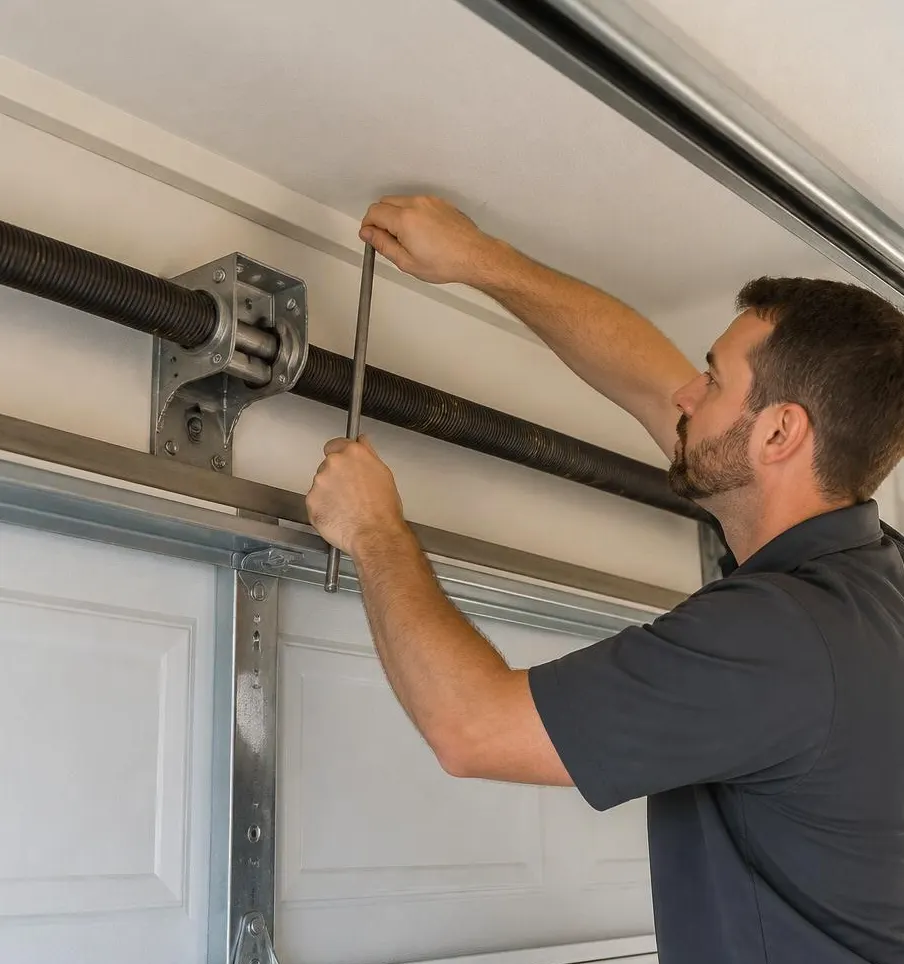
- Spring tension: Cold steel contracts and springs lose a bit of flex, which puts more strain on the opener and increases the chance of a snap on the coldest mornings.
- Lubrication: Switch to a silicone-based lubricant on rollers, hinges, and springs before the first hard freeze. Standard oil thickens and gums up in icy weather.
- Auto-reverse sensors: Confirm the safety sensors still align and trigger correctly. Ice buildup or a bumped sensor can cause false triggers or, worse, failure to reverse.
- Threshold seal: A good bottom seal keeps meltwater and ice from building up directly under the door, which can freeze it shut overnight.
Old Houses vs. New Builds
Housing in this area ranges from older homes with original wood or lightweight steel doors to newer construction with insulated, wind-rated doors. Older wood doors are especially prone to swelling and warping after a wet fall, which throws off the seal and the way the door sits in the track. Newer insulated steel doors handle wind and moisture better structurally, but the openers and sensors on them still need the same seasonal attention. Don't assume a newer door is storm-ready just because it's newer; the hardware around it still wears the same way.
When to Call Shepherdstown Garage Door
If you're seeing daylight around the edges of a closed door, hearing grinding or popping when it moves, or noticing the door looks like it's bowing even slightly in the middle, stop opening and closing it and call before the next storm front comes through. Shepherdstown Garage Door handles garage door maintenance tune-ups that catch worn seals, loose track, and spring wear before they become a storm-day emergency, and they offer spring replacement for doors that are showing age or strain going into the cold months. If a storm has already done damage, their emergency garage door service covers the kind of after-hours failure that can't wait until Monday.
Get your door checked now, while the weather still allows for a same-week appointment. Call Shepherdstown Garage Door to schedule storm and winter prep for your home in Shepherdstown, WV and the surrounding Eastern Panhandle.